





Automation Built for the Demands of Real Manufacturing
We build end-to-end automation solutions for manufacturers — from high-speed assembly lines handling diverse materials, to flexible multi-SKU systems, all backed by long-term service and maintenance programs.
Why Manufacturers Choose Edge
- High-Speed, Reliable Assembly
We build systems that accommodate unique design iterations and engineering for long-term mechanical reliability — not just initial performance. - Handling Difficult Materials and Product Types
We engineer solutions specifically tailored to the behaviour of difficult materials, such as cardboard, fibrous materials, rubber, thin metal membranes, and dual-durometer plastics. - Flexible Product Configurations
We design systems with built-in adaptability, so your line can accommodate changes in product configurations without a full mechanical overhaul — protecting your ROI as your product mix evolves. - Long System Life
We build for the long haul, not the launch date. This drives our approach to design, material selection, and component specification from the start. - Long Term Support
We design for maintainability and stand behind our systems. From day one to year ten, the system you invested in should perform as you invested in it.
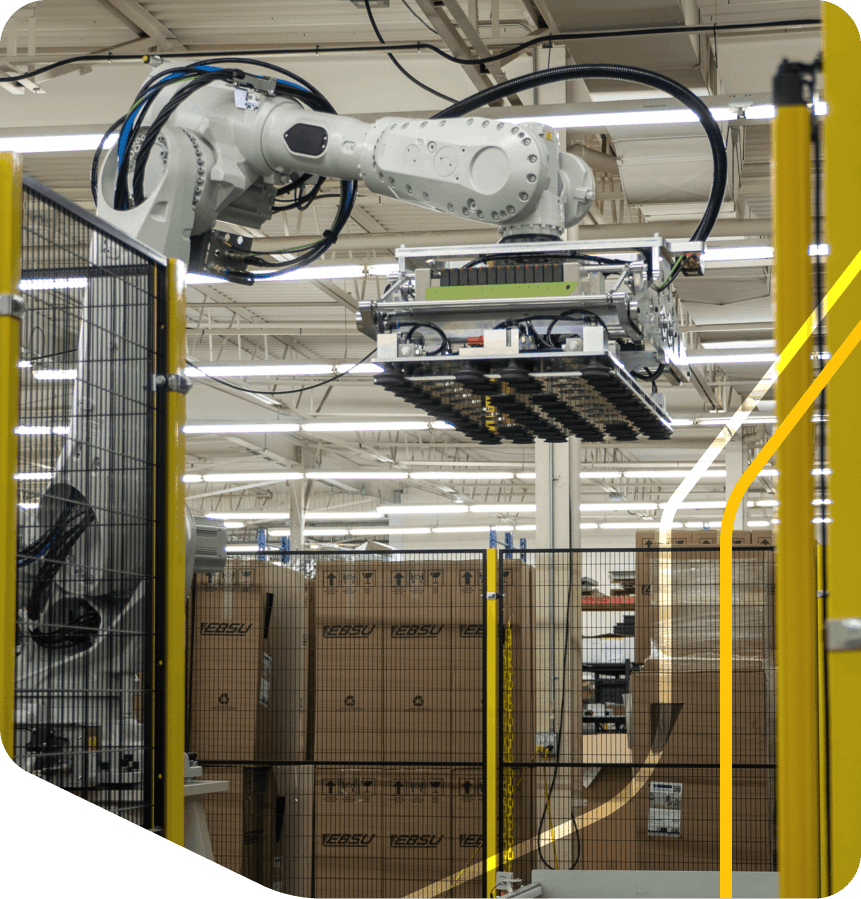



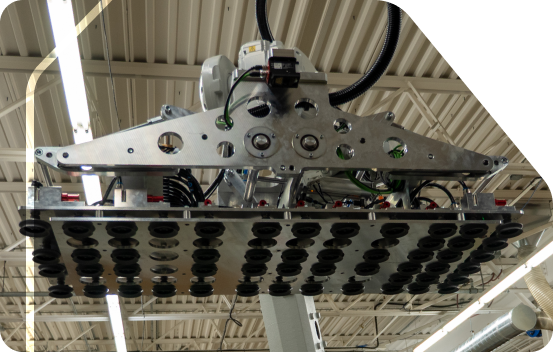
We Fit the Automation to the Manufacturer
Technical requirements vary widely across industries. Some manufacturers provide detailed specifications—production rates, materials, and integration needs—allowing us to deliver exactly what they require. Others may have less defined needs, and we help clarify those requirements to design a sustainable system.
Regardless, our process is collaborative. We partner with you to create a solution that works in your facility, with your team, to achieve your production targets.
Examples of Our Solutions
Designing food and beverage machinery requires complying with strict regulatory and sanitary standards, ensuring equipment is “cleanable to a microbiological level” and prevents contamination, beyond traditional machine design methods.


Soap/Alcohol Foam Valve
Commercial soap dispensers rely on bottled soap and alcohol with high-volume dispensing. Each bottle includes an integrated dispensing valve — welded in place and replaced with every bottle change. That valve is a precision assembly of up to 10 components: plastic and rubber molded parts, screens, an O-ring, and a check ball, each put together in a specific order depending on valve type.
Assembling these consistently, at scale, with zero compromise on quality demanded a purpose-built automation solution.
Our team designed and developed a dual-dial assembly machine. The system uses two rotary index dials working in sequence — one builds the piston sub-assembly, the other completes the full valve. Components are delivered via bowl feeders, escapements, and high-speed pick-and-place technology. At each index position, the valve is progressively assembled with inline quality controls: inspection, measurement, sorting, and press-force monitoring.
- Achieved fully assembled, inspected, and leak-tested valve every 1.45 seconds.
- Improved cycle rates and upgraded automation for longer life and higher uptime.
- Demonstrated track record ~15 years, producing over 100 million valves and remaining in full operation.
Commercial soap dispensers rely on bottled soap and alcohol with high-volume dispensing. Each bottle includes an integrated dispensing valve — welded in place and replaced with every bottle change. That valve is a precision assembly of up to 10 components: plastic and rubber molded parts, screens, an O-ring, and a check ball, each put together in a specific order depending on valve type.
Assembling these consistently, at scale, with zero compromise on quality demanded a purpose-built automation solution.
Our team designed and developed a dual-dial assembly machine. The system uses two rotary index dials working in sequence — one builds the piston sub-assembly, the other completes the full valve. Components are delivered via bowl feeders, escapements, and high-speed pick-and-place technology. At each index position, the valve is progressively assembled with inline quality controls: inspection, measurement, sorting, and press-force monitoring.
- Achieved fully assembled, inspected, and leak-tested valve every 1.45 seconds.
- Improved cycle rates and upgraded automation for longer life and higher uptime.
- Demonstrated track record ~15 years, producing over 100 million valves and remaining in full operation.

Air-to-Air Heat Exchanger Core Manufacturing
Manufacturing of Air-to-Air heat exchangers (for Heat Recovery Ventilators) demands extraordinary precision. Each plate must be stamped, cut, and formed to exacting tolerances before being stacked — over 100 plates per core — into a perfectly sealed assembly. Any misalignment, leak path, or inconsistency in flow characteristics renders a core unusable. Producing these at scale, consistently and reliably, is no small engineering feat.
We spent 25 years developing and refining the manufacturing and testing automation behind these cores, across multiple shapes and configurations. The delivered system integrates:
- Aluminum de-coiling systems and multi-stage servo presses to process raw aluminum stock with precision.
- Ultra-thin gauge cutting and forming dies to produce each individual plate variant.
- SCARA robots with vacuum end-of-arm tooling (Shibaura Machine) to transfer two plate variants from the dies to four dedicated assembly stations.
- Four automated assembly stations that stack plates in succession, building each 100+ plate core with consistent, repeatable accuracy.
- Automated ejection and accumulation system that presents completed cores to operators for removal, testing, and framing.
- Integrated leak and flow testing to verify every core meets performance specifications before it leaves the line.
- Beckhoff controls with custom servo press systems, powering the entire process.
- 30 years of continuous production on the legacy core machine, sustained through multiple rebuilds, service intervals, and system upgrades — and is still running today.
- 15+ years of production on the newer core design, developed collaboratively with the customer and outlined in this case study.
- Dual-core styles are manufactured on purpose-built lines, each optimized for its configuration.
- Long-term customer partnership rooted in co-development, ongoing support, and system evolution.
Manufacturing of Air-to-Air heat exchangers (for Heat Recovery Ventilators) demands extraordinary precision. Each plate must be stamped, cut, and formed to exacting tolerances before being stacked — over 100 plates per core — into a perfectly sealed assembly. Any misalignment, leak path, or inconsistency in flow characteristics renders a core unusable. Producing these at scale, consistently and reliably, is no small engineering feat.
We spent 25 years developing and refining the manufacturing and testing automation behind these cores, across multiple shapes and configurations. The delivered system integrates:
- Aluminum de-coiling systems and multi-stage servo presses to process raw aluminum stock with precision.
- Ultra-thin gauge cutting and forming dies to produce each individual plate variant.
- SCARA robots with vacuum end-of-arm tooling (Shibaura Machine) to transfer two plate variants from the dies to four dedicated assembly stations.
- Four automated assembly stations that stack plates in succession, building each 100+ plate core with consistent, repeatable accuracy.
- Automated ejection and accumulation system that presents completed cores to operators for removal, testing, and framing.
- Integrated leak and flow testing to verify every core meets performance specifications before it leaves the line.
- Beckhoff controls with custom servo press systems, powering the entire process.
- 30 years of continuous production on the legacy core machine, sustained through multiple rebuilds, service intervals, and system upgrades — and is still running today.
- 15+ years of production on the newer core design, developed collaboratively with the customer and outlined in this case study.
- Dual-core styles are manufactured on purpose-built lines, each optimized for its configuration.
- Long-term customer partnership rooted in co-development, ongoing support, and system evolution.

High-Capacity Robotic Bag Palletizing System
Manual bag palletizing is physically demanding, inconsistent, and difficult to scale. Facilities handling bagged products face a unique set of complications: bags vary in size, fill material, and weight — making standardization difficult. Inconsistent stacking leads to unstable pallets, product damage, and downstream fulfillment issues. At high throughput volumes, manual labor simply can’t keep pace, and the ergonomic toll on workers creates ongoing safety and retention challenges.
Our system features a Kawasaki 180kg industrial robot designed for speed, precision, and reliability in demanding environments. It handles various bag types and fill materials on a single platform, with flexible pallet programming to suit different sizes, dimensions, and stacking needs.
- Intelligent Infeed & Bag Conditioning
The conveyor connects to any bag-filling unit with adjustable height and a bag kicker. It uses round and square rollers to flatten bags, ensuring stable stacks. An optional overhead conveyor flattens heavy or sticky materials. Every bag is weighed; out-of-tolerance bags are rejected and isolated. Metal detection can also be added for safety.
- Advanced End-of-Arm Tooling (EOAT)
The robot features a custom tine-style gripper to cradle bags from below, keeping them flat for secure stacking.
- Flexible Pallet Management
Options include floor locators, conveyor systems, and index tables, with integration for automated shrink wrapping. Safety light curtains and interlocks enable safe operator interaction without stopping production.
- Up to 19 bags palletized per minute, depending on bag characteristics and stack pattern.
- Handles multiple bag types and fill materials on a single robot and tooling platform.
- Automatic weight verification and rejection — every bag checked, non-conforming units isolated without operator intervention.
- Consistent, stable pallet stacks through engineered bag flattening and flat-orientation placement.
- Continuous operation enabled by safety light curtains and interlocking systems — no production halts for operator interaction.
- Rapid ROI configurations available — streamlined "basic" setups purpose-built for facilities transitioning away from manual palletizing.
- Fully scalable — advanced integration options for high-volume producers with complex facility layouts and demanding production requirements.
Manual bag palletizing is physically demanding, inconsistent, and difficult to scale. Facilities handling bagged products face a unique set of complications: bags vary in size, fill material, and weight — making standardization difficult. Inconsistent stacking leads to unstable pallets, product damage, and downstream fulfillment issues. At high throughput volumes, manual labor simply can’t keep pace, and the ergonomic toll on workers creates ongoing safety and retention challenges.
Our system features a Kawasaki 180kg industrial robot designed for speed, precision, and reliability in demanding environments. It handles various bag types and fill materials on a single platform, with flexible pallet programming to suit different sizes, dimensions, and stacking needs.
- Intelligent Infeed & Bag Conditioning
The conveyor connects to any bag-filling unit with adjustable height and a bag kicker. It uses round and square rollers to flatten bags, ensuring stable stacks. An optional overhead conveyor flattens heavy or sticky materials. Every bag is weighed; out-of-tolerance bags are rejected and isolated. Metal detection can also be added for safety.
- Advanced End-of-Arm Tooling (EOAT)
The robot features a custom tine-style gripper to cradle bags from below, keeping them flat for secure stacking.
- Flexible Pallet Management
Options include floor locators, conveyor systems, and index tables, with integration for automated shrink wrapping. Safety light curtains and interlocks enable safe operator interaction without stopping production.
- Up to 19 bags palletized per minute, depending on bag characteristics and stack pattern.
- Handles multiple bag types and fill materials on a single robot and tooling platform.
- Automatic weight verification and rejection — every bag checked, non-conforming units isolated without operator intervention.
- Consistent, stable pallet stacks through engineered bag flattening and flat-orientation placement.
- Continuous operation enabled by safety light curtains and interlocking systems — no production halts for operator interaction.
- Rapid ROI configurations available — streamlined "basic" setups purpose-built for facilities transitioning away from manual palletizing.
- Fully scalable — advanced integration options for high-volume producers with complex facility layouts and demanding production requirements.
More Than Throughput. More Than Technology. More Than a Vendor.
The right automation doesn’t just increase throughput — it changes your facility’s capabilities and output. Edge Automation brings the technical depth and collaborative approach to make that happen, built around your operation and supported for the life of the system.